
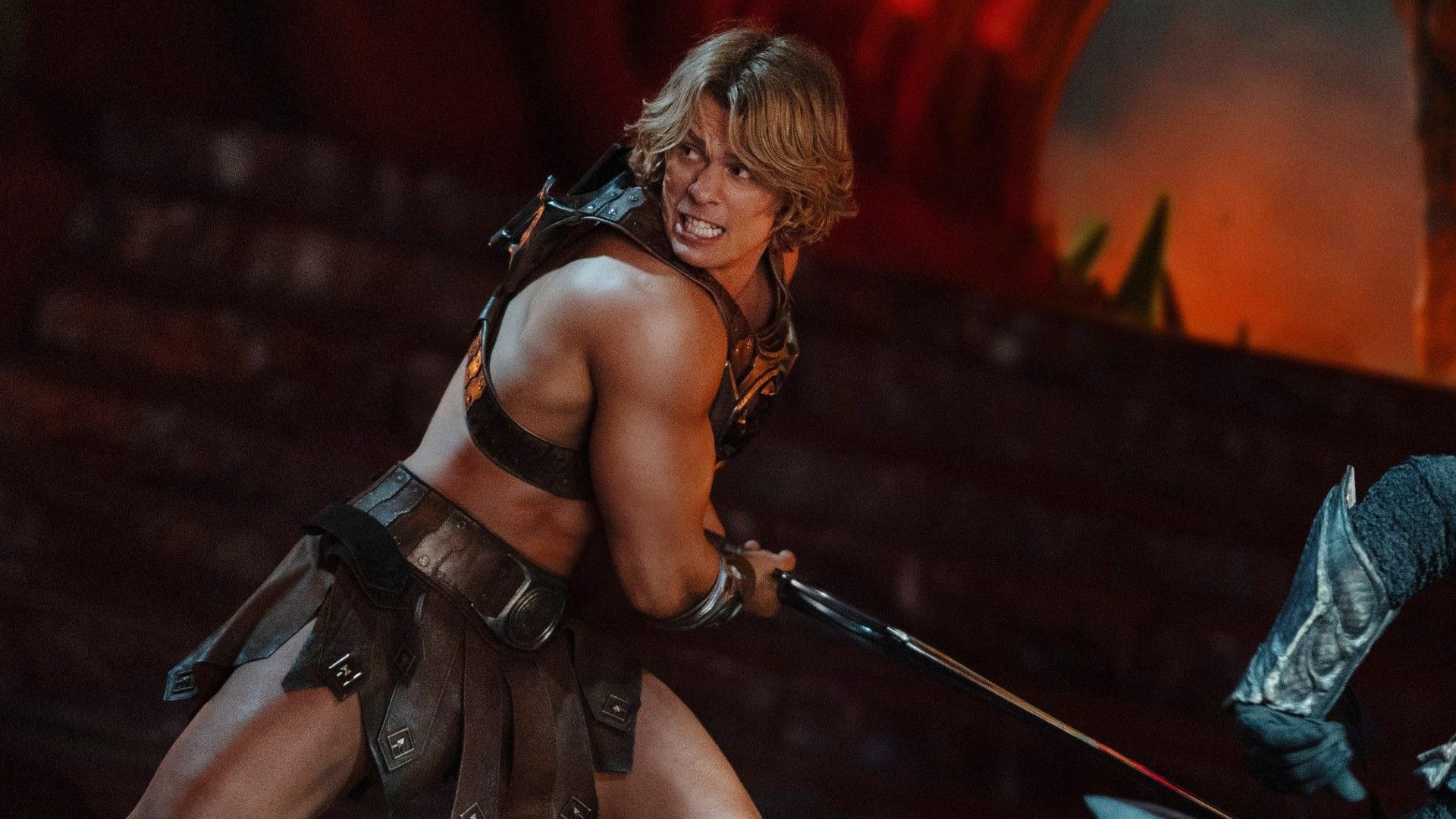
Masters of the Universe premiered in theaters in June 2025, marking the first time He-Man, Skeletor, and the beloved characters from Eternia have appeared on the silver screen in nearly 40 years. The release represents a significant moment for fans who grew up with the iconic franchise during its 1980s heyday, when action figures flew off shelves and the animated series dominated Saturday morning television. Critical reception has been mixed to positive, with many reviewers praising the film’s visual spectacle and faithful adaptation of the source material, while audiences have largely embraced the return of these legendary characters to cinema.
The new adaptation arrives with an interesting parallel to another major fantasy franchise that attempted a theatrical revival after decades of building its mythology through other media. Much like the Dungeons & Dragons film that debuted in 2000, Masters of the Universe brings with it an enormous wealth of accumulated lore spanning 43 years since the original toy line launched in 1982. That D&D adaptation, despite drawing from 26 years of tabletop gaming history, novels, and cultural significance at the time, became one of cinema’s most notorious bombs, earning just $33.8 million worldwide against its estimated budget and receiving overwhelmingly negative reviews.
A Tale Of Two Franchises With Decades Of Mythology
The comparison between Masters of the Universe and the 2000 Dungeons & Dragons film is striking when examining the sheer volume of storytelling material each franchise accumulated before their respective theatrical releases. He-Man and his allies first burst onto the scene in 1982 when Mattel launched the toy line, quickly followed by the Filmation animated series in 1983 that ran for 130 episodes. Combined with spin-offs like She-Ra: Princess of Power, multiple animated revivals, comic book series, and decades of merchandise, the Masters of the Universe franchise has built approximately 43 years of continuous mythology and character development.
Dungeons & Dragons, when it received its disastrous 2000 film adaptation, had accumulated roughly 26 years of lore since its creation by Gary Gygax and Dave Arneson in 1974. Together, these two franchises represent a combined 96 years of fantasy storytelling tradition, making them among the most mythology-rich properties ever adapted for film. The D&D film’s $33.8 million worldwide gross against substantial production and marketing costs resulted in an estimated loss of approximately $208 million when accounting for theatrical release economics, making it one of the most significant fantasy film failures in Hollywood history.
Learning From Hollywood’s Fantasy Film Mistakes
The 2000 Dungeons & Dragons adaptation has become a cautionary tale in Hollywood about how not to handle beloved fantasy properties. Starring Jeremy Irons in an infamously over-the-top performance as the villain Profion, the film suffered from a troubled production, subpar special effects for its era, and a script that failed to capture the essence of what made the tabletop game so beloved. Critics savaged the film, and audiences stayed away in droves, proving that brand recognition alone cannot guarantee box office success.
Masters of the Universe appears to have learned valuable lessons from such past failures. The 2025 film reportedly invested heavily in practical effects combined with cutting-edge CGI, assembled a cast and crew passionate about the source material, and worked closely with longtime fans to ensure authenticity. The original 1987 Masters of the Universe film starring Dolph Lundgren, while now considered a cult classic, was also a commercial disappointment that contributed to the franchise’s dormancy on the big screen for nearly four decades. This new iteration seems determined not to repeat those mistakes.
Fan Reception And The Future Of Eternia
Fan opinions on major franchise adaptations are notoriously difficult to gauge, given the passionate and sometimes divided nature of longtime enthusiasts. However, early indications suggest that Masters of the Universe 2025 has struck a chord with audiences. Online discourse has been largely positive, with many viewers praising the film’s respect for the source material while appreciating updates that make the story accessible to newcomers. The film’s success could potentially launch an entire cinematic universe exploring the rich mythology of Eternia, including potential spin-offs featuring characters like She-Ra, Man-At-Arms, and the various factions vying for control of Castle Grayskull.
The contrast with the D&D franchise is instructive here as well. After the 2000 disaster, it took over two decades for Dungeons & Dragons to receive a proper theatrical treatment with 2023’s Honor Among Thieves, which finally delivered the kind of adaptation fans had long awaited. Masters of the Universe’s creative team clearly studied both the failures and eventual successes of similar properties, crafting an approach that honors the franchise’s legacy while pushing it forward into a new era of fantasy filmmaking.
Expert Opinion: The success of Masters of the Universe suggests Hollywood has finally cracked the code on adapting nostalgia properties with extensive mythology. Studios now recognize that respecting source material while modernizing presentation is crucial for both critical and commercial success. This film could mark the beginning of a new wave of 1980s franchise revivals that learn from past failures rather than repeating them.