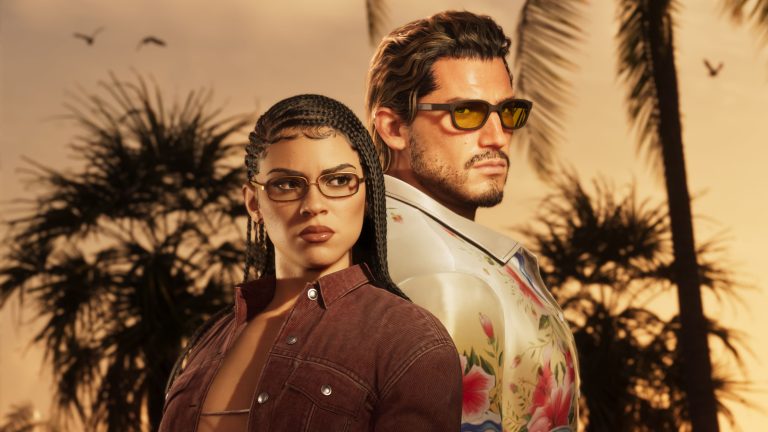

After more than a decade without a new mainline entry, the legendary Castlevania franchise is finally returning to gaming platforms, and KONAMI has made a surprising decision about who will bring this iconic series back to life. Rather than developing the game internally, the Japanese publisher has entrusted French studio Evil Empire—best known for their work on the critically acclaimed roguelike Dead Cells and its celebrated Return to Castlevania DLC—with the monumental task of crafting a brand-new chapter in the vampire-hunting saga. This unexpected partnership represents a bold gamble for one of gaming’s most beloved franchises, but early impressions suggest that KONAMI’s trust may be well-placed.
Key Points
- Evil Empire, developers of Dead Cells, will create the first mainline Castlevania since Lords of Shadow 2 in 2014
- Rose Belmont, Trevor’s daughter, debuts as protagonist in a story set during 1499 Paris under siege by monsters
- The Arcana system lets players seal defeated bosses into tarot cards, unlocking their abilities for combat
- Seven weapon categories and a Relic system encourage diverse playstyles across the interconnected map
- KONAMI mandated 2D action-exploration, canonical storyline, and the Vampire Killer whip as non-negotiable elements
The Castlevania series has been a cornerstone of gaming history since its debut in 1986, introducing players to the Belmont family’s eternal struggle against Count Dracula and his forces of darkness. Throughout the years, the franchise has evolved from challenging linear platformers to sprawling exploration-focused adventures, with 1997’s Symphony of the Night essentially creating the “Metroidvania” genre that continues to influence game design today. The series’ last major release, Lords of Shadow 2, launched in 2014, leaving fans hungry for a true continuation of the classic 2D formula that defined the franchise’s golden era.
How the Dead Cells Team Earned KONAMI's Trust
The collaboration between KONAMI and Evil Empire didn’t emerge overnight—it evolved organically from a project that was originally conceived as a simple tribute. Evil Empire had previously partnered with KONAMI to create the Return to Castlevania DLC for Dead Cells, which received widespread critical acclaim for its faithful recreation of Castlevania’s atmosphere and gameplay elements within Dead Cells’ roguelike framework. What began as a licensed expansion gradually transformed into something far more ambitious through ongoing dialogue between the two companies.
According to Tsutomu Taniguchi, Producer at KONAMI, the decision to continue working with the French studio came down to two crucial factors. “The first is Evil Empire’s passion for Castlevania,” Taniguchi explained during a recent interview. “The second is their expertise in action games. Castlevania has always been an action series, so it was essential that the controls, gameplay, and overall feel lived up to players’ expectations.” Emmanuel Nouaille, Creative Director at Evil Empire, received these compliments with characteristic humility, noting that “our best résumé was simply our work.” The trust built during the DLC development proved instrumental in convincing KONAMI that Evil Empire could handle a full-scale Castlevania project.
Members of the press were recently invited to a hands-on preview session held in a uniquely appropriate venue: the Chapelle Sainte-Jeanne-d’Arc in Paris’ 14th arrondissement. This Gothic chapel provided a fitting backdrop for experiencing Belmont’s Curse, which opens in a dark, atmospheric interpretation of the French capital. Set in 1499, the game depicts Paris engulfed in flames as monstrous creatures emerge from the shadows, with legendary vampire hunter Trevor Belmont venturing into the burning streets alongside his daughter, Rose Belmont—a brand-new protagonist who will take center stage in this adventure.
Establishing the Core Pillars of a Modern Castlevania
| System | Details |
|---|---|
| Arcana System | Defeated bosses (Death, Medusa, Carmilla, Joan of Arc) sealed into tarot cards grant special abilities |
| Weapon Categories | Seven distinct weapon types available for customization |
| Relics | Equipment triggering effects through offensive and defensive actions |
| Whip Traversal | Trapeze-style swinging for exploration and combat mobility |
Before a single line of code could be written, both teams faced a fundamental challenge: defining what truly makes a Castlevania game. This question proved far more complex than it might initially appear, given the franchise’s evolution across multiple console generations and gameplay styles. “Castlevania means something different to everyone,” Nouaille explained. “We all grew up with different games, different characters, and different memories. Before we could build a new game, we first had to agree on the core pillars that define Castlevania.”
KONAMI’s role was to establish a common creative framework that would preserve Castlevania’s identity while giving Evil Empire the freedom to express its own vision. Several non-negotiable elements were established early in development: the game had to remain a 2D action-exploration experience, fit within the official Castlevania canon, and keep the iconic Vampire Killer whip at the heart of its gameplay. Once these principles were agreed upon, the French studio was given considerable creative latitude to build upon those foundations.
The whip serves as perhaps the clearest example of this philosophy in action. Rather than reinventing this iconic weapon, Evil Empire chose to expand its role in both combat and traversal. The goal was to make players feel like agile, powerful vampire hunters capable of using the whip as naturally for movement as for defeating enemies. Players can now swing through environments with trapeze-like fluidity, opening up new possibilities for both exploration and combat encounters. This modernization extends to the game’s overall pacing, with the team pursuing a faster, more energetic experience while maintaining the challenging exploration that has defined the series through environmental hazards, traps, and creative uses of the whip.
1499 Paris Becomes the Franchise's New Gothic Playground
Setting Belmont’s Curse in late 15th-century Paris represents one of Evil Empire’s most distinctive creative contributions to the franchise. During the hands-on preview session, landmarks such as Notre-Dame Cathedral and the Catacombs appeared alongside references to various French historical locations, creating a setting that feels authentic rather than merely decorative. This choice allows the game to maintain Castlevania’s European Gothic atmosphere while exploring territory the series hasn’t previously visited.
The narrative positions the game within the established Castlevania timeline, continuing the story after the events of Dracula’s Curse and Curse of Darkness. Rose Belmont, Trevor’s daughter, emerges as a natural extension of the franchise’s lore rather than a random addition. Armed with the legendary Vampire Killer whip, she becomes embroiled in a dark conspiracy threatening to devastate Paris. The game introduces an innovative Arcana system where defeated bosses—including legendary creatures like Death, Medusa, and Carmilla, alongside enigmatic new foes such as Joan of Arc—are sealed into Rose’s tarot cards, granting her access to their skills and special abilities.
Character customization extends beyond the Arcana system through a robust equipment framework featuring weapons across seven distinct categories and Relics that trigger powerful effects through both offensive and defensive actions. This depth of customization encourages players to develop unique playstyles while providing incentives for thorough exploration of the game’s interconnected map.
KONAMI's Framework, Evil Empire's Creative Freedom
Throughout development, Belmont’s Curse evolved through constant dialogue between KONAMI and Evil Empire, representing what Nouaille describes as “a genuine creative collaboration” rather than a simple work-for-hire arrangement. The Japanese publisher provided guidance on maintaining the series’ essential identity while the French studio brought its own sensibilities to the project, resulting in a game that honors Castlevania’s legacy while confidently forging its own path.
Nouaille shared a memorable anecdote that encapsulates the trust between both teams: when the Return to Castlevania DLC was completed, Taniguchi visited the studio to play through it. As he explored the castle and discovered numerous details and Easter eggs he hadn’t noticed before, he simply turned around and gave the team a thumbs up. “That was probably the moment I realized this collaboration could become much more than a one-off,” Nouaille recalled.
The team’s ambitions remain grounded despite the weight of expectations. Evil Empire’s goal was never to surpass landmark entries like Symphony of the Night, but simply to contribute a worthy new chapter to a series that has continued to evolve for nearly four decades. For Nouaille, the real turning point in development came when he instinctively opened the in-game map to mark areas for later revisitation after unlocking new abilities: “That’s when I realized we were no longer just testing mechanics. We were actually playing a Castlevania game.” Castlevania: Belmont’s Curse arrives on October 15 for Xbox Series X|S and Xbox on PC, with pre-orders now available.
A Calculated Risk That Could Redefine Castlevania's Future
KONAMI’s decision to outsource a flagship IP to a smaller Western studio marks a significant shift in how legacy Japanese publishers approach dormant franchises. Rather than staffing up internally or contracting a large established studio, they’ve bet on a team whose primary credential is a well-received DLC collaboration. The Return to Castlevania expansion for Dead Cells essentially functioned as an audition tape, and Evil Empire passed.
The 2D action-exploration mandate suggests KONAMI recognizes that fans want a return to the Metroidvania roots Symphony of the Night established, not another 3D reboot attempt. Setting the game in Paris rather than Transylvania gives Evil Empire room to establish visual identity without contradicting decades of castle layouts fans have memorized.
Rose Belmont as protagonist fills a gap in the timeline between existing games while adding a playable female Belmont to the canon. The Arcana system borrowing boss powers echoes Soma Cruz’s soul mechanics from Aria of Sorrow, suggesting Evil Empire studied what worked in the GBA and DS era. Whether this formula can satisfy both nostalgic fans and newcomers unfamiliar with the series remains the central question heading toward release.
Frequently Asked Questions
When was the last mainline Castlevania game released?
Lords of Shadow 2 launched in 2014, making Belmont’s Curse the first major entry in over a decade. The franchise has seen mobile releases and compilations since then, but no new canonical 2D action-exploration game.
Who is Rose Belmont and how does she fit the Castlevania timeline?
Rose Belmont is Trevor Belmont’s daughter, introduced as the protagonist of Belmont’s Curse. The game is set in 1499 Paris and continues the timeline after Dracula’s Curse and Curse of Darkness, making her a canonical addition to the Belmont lineage.
What is the Arcana system in Belmont's Curse?
When Rose defeats bosses like Death, Medusa, Carmilla, or Joan of Arc, she seals them into tarot cards. These cards grant access to the defeated enemies’ skills and special abilities, expanding combat options as players progress.
Expert Opinion: The decision to partner with Evil Empire represents KONAMI’s recognition that passion and proven expertise can outweigh in-house development traditions for dormant franchises. Given Evil Empire’s track record with Dead Cells and their demonstrated understanding of Castlevania’s core appeal through the Return to Castlevania DLC, this collaboration could serve as a model for how major publishers revitalize beloved but neglected intellectual properties. If successful, Belmont’s Curse may not only satisfy longtime fans but also introduce a new generation to the franchise that helped define an entire genre of game design.