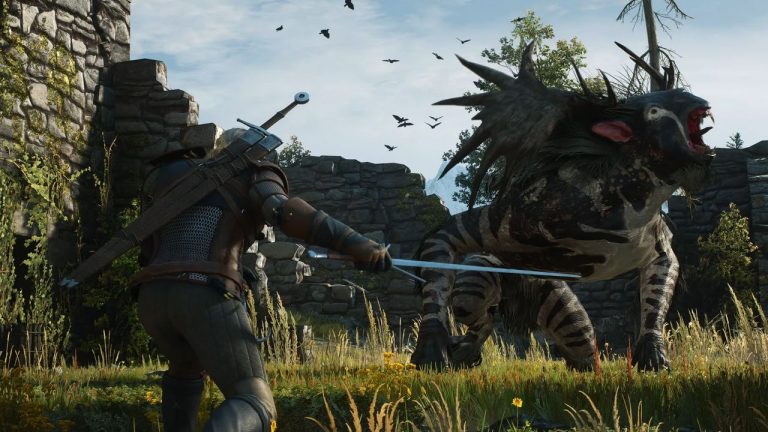

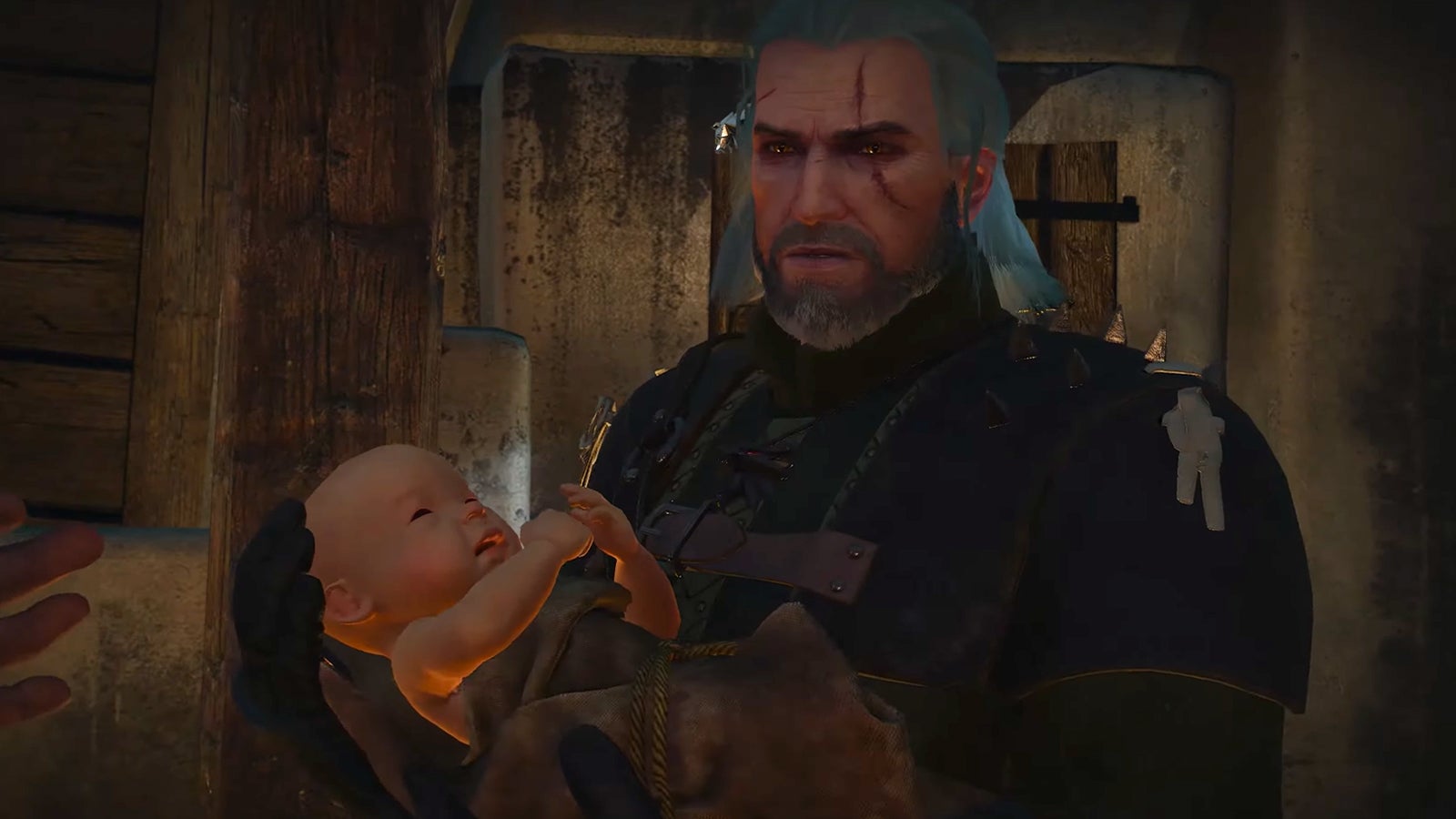
The development of The Witcher 3: Wild Hunt is filled with fascinating stories about the creative challenges CD Projekt Red faced while crafting one of the most acclaimed role-playing games of the past decade. In a recent interview with Edge Magazine, quest designer Philipp Weber revealed one of the most unexpectedly hilarious bugs the team encountered during development: female NPCs would unceremoniously drop their babies on the ground whenever they felt threatened by the player character, Geralt of Rivia. This morbidly comedic glitch was an unintended consequence of the studio’s ambitious efforts to create an immersive, believable world.
The Witcher 3, released in 2015, set new standards for open-world game design with its richly detailed environments and memorable characters. CD Projekt Red invested tremendous effort into making the game’s world feel alive and authentic, from the bustling streets of Novigrad to the quiet villages scattered across the war-torn countryside. This attention to detail helped the game sell over 50 million copies worldwide and earn numerous Game of the Year awards, cementing its place in gaming history as a landmark achievement in the RPG genre.
The Quest for Authentic NPC Behavior
Weber explained that the development team was particularly focused on making small villages feel genuinely inhabited. Because these rural areas featured only a handful of buildings, players would naturally become curious about whether the inhabitants were truly simulated or merely background decoration. “If a village only has eight houses, people will want to see if the people truly exist in the world, or if it’s just fakery,” Weber noted. “Lots of people nowadays are interested in those kinds of details, and it really came to haunt us.” This philosophy led the team to create elaborate day and night cycles for NPCs, complete with schedules that dictated their activities throughout the day.
Rather than programming specific patrol paths for each character, the developers implemented an innovative system where NPCs could choose from various “spots of interest” within their environment. This approach allowed villagers to make autonomous decisions about their activities, moving from woodcutting to carpentry to other tasks based on available options. Weber provided an example from the Novigrad harbor, where 50 active sailors could choose from 200 possible activity spots, ensuring variety and preventing repetitive behavior patterns that might break immersion.
When Realism Creates Chaos
However, while the team excelled at simulating daily routines, they initially overlooked how NPCs would react when threatened by the player. “When it came to actually reacting to the player, there wasn’t that much detail,” Weber admitted. The NPCs had sophisticated schedules but lacked nuanced responses to Geralt’s presence, particularly when he burst into their homes or drew his weapons. The basic fear response programmed into the characters was simple: drop whatever you’re holding and flee. This seemed reasonable enough until the developers realized that “whatever you’re holding” could include infants.
“They would drop what they’re currently working on, that thing would fall to the ground, and they’d run away, afraid,” Weber explained. “For a few weeks, women were just dropping their babies, left and right.” The bug created scenes that were simultaneously disturbing and absurd, as terrified virtual mothers abandoned their children mid-panic. While certainly not intentional, this glitch highlights the complex web of systems that modern game developers must balance when creating believable virtual worlds. Every mechanic can have unforeseen interactions with others, sometimes producing results that range from game-breaking to unintentionally comedic.
Looking Forward to the Next Chapter
The baby-dropping bug was eventually fixed before the game shipped, sparing players from witnessing this particular brand of digital child endangerment. However, stories like this offer valuable insight into the creative and technical challenges of game development. Creating truly believable artificial intelligence requires anticipating countless edge cases and potential interactions between systems designed independently. CD Projekt Red’s willingness to share these development anecdotes demonstrates both transparency and a healthy sense of humor about the game-making process.
The next installment in The Witcher franchise, tentatively known as “The Witcher 4” by fans, is currently in development and will center on Ciri, Geralt’s adopted daughter and a major character from the previous game. Early gameplay footage was showcased at the State of Unreal 2025 presentation, generating significant excitement among the series’ dedicated fanbase. While no official release date has been announced, players are eagerly anticipating another adventure through the dark fantasy world. Given the lessons learned from The Witcher 3’s development, it seems unlikely that NPCs will be casually discarding infants in this new entry, though CD Projekt Red has never shied away from controversial content in their games.
Expert Opinion: The baby-dropping bug in The Witcher 3 serves as a perfect case study in emergent gameplay behavior, where independent systems interact in unexpected ways. As open-world games become increasingly complex, developers will need to invest more resources in testing edge cases and system interactions. This challenge will only grow with the next Witcher game, which will likely feature even more sophisticated AI systems running on more powerful hardware.